
Power Equipment
2026-07-14
Power Equipment – Motor Housing
Motor housings are core load-bearing and heat-dissipating castings for power equipment and ensure the stable operation of motors. As the domestic power equipment industry upgrades, OEMs continue to raise requirements for the flange face precision, surface quality, and batch consistency of motor housing castings. Traditional manual grinding produces large quality fluctuations and can hardly meet mass-production supporting requirements.
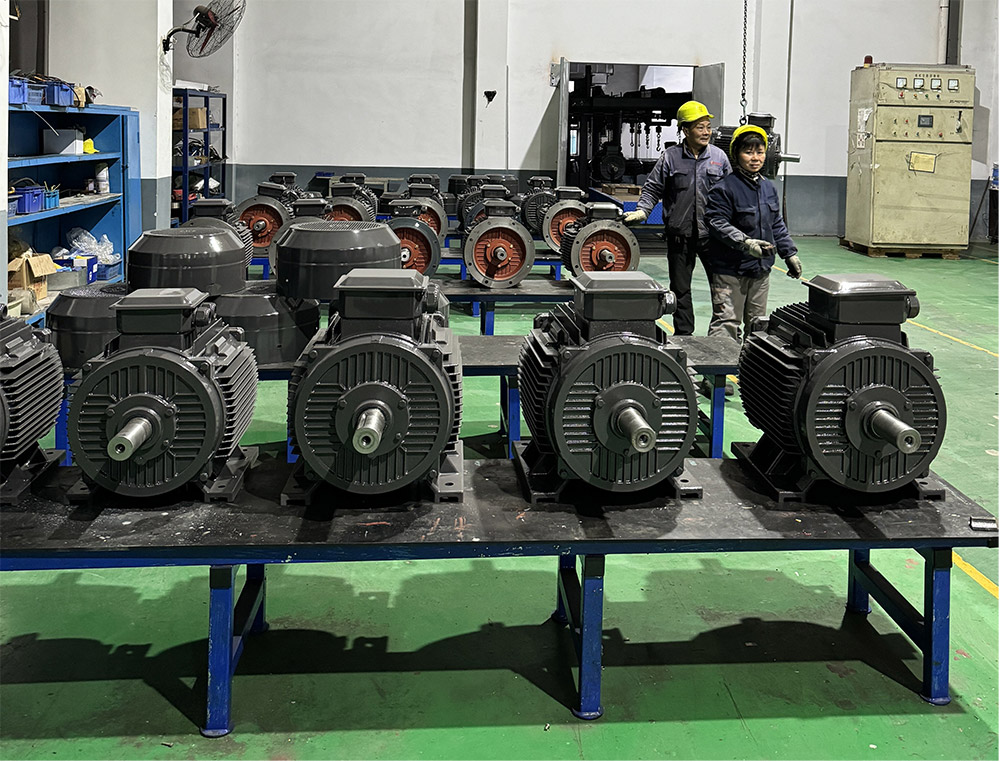
Motor housings are produced through sand casting, featuring complex cylindrical structures and uneven wall thickness distribution. Castings are prone to shrinkage and expansion deformation after cooling and forming, resulting in differences in the contour of individual pieces. Flashes, burrs, and oxide scale remain on parting surfaces, flange end faces, and mounting supports. Traditional fixed fixtures can only be positioned according to theoretical dimensions and cannot compensate for casting deformation deviations, making problems such as under-grinding of flange faces and localized over-grinding prone to occur. Manual cleaning of burrs on support edges and corners is difficult, and the rework rate is relatively high.
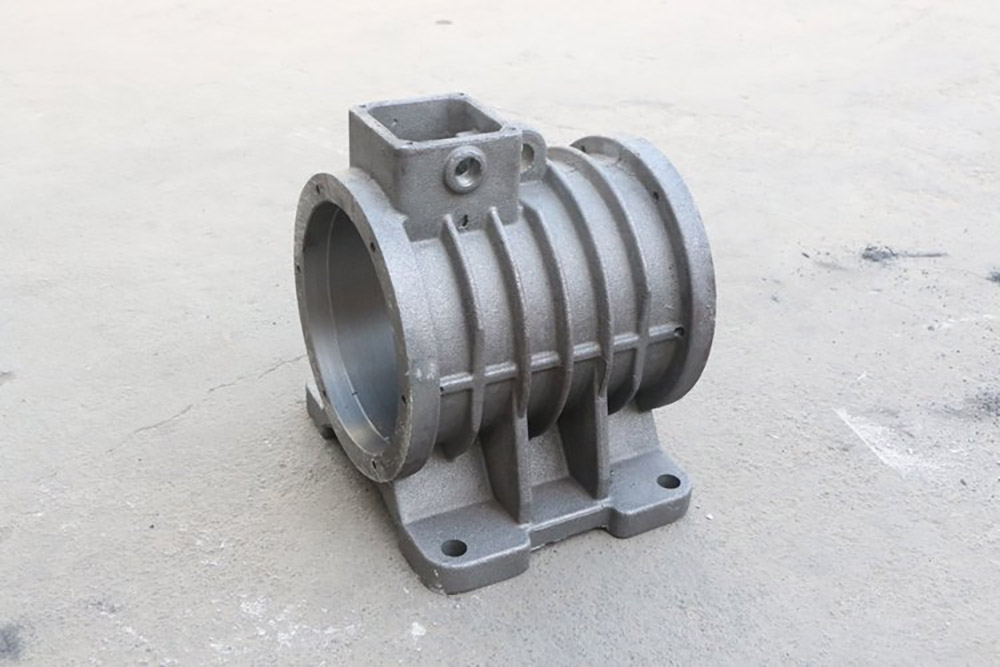
To address the grinding pain points of motor housing castings, Quanyu Industry has developed an automated grinding solution based on 3D vision deviation correction technology. The equipment scans and captures the actual contour of each motor housing casting in real time, uses algorithms to calculate shrinkage and expansion deformation and automatically compensate for it, resolves the problem of inaccurate positioning caused by casting deformation, and dynamically generates a grinding trajectory adapted to each individual workpiece, precisely removing flashes and burrs from flanges, parting surfaces, and support positions.
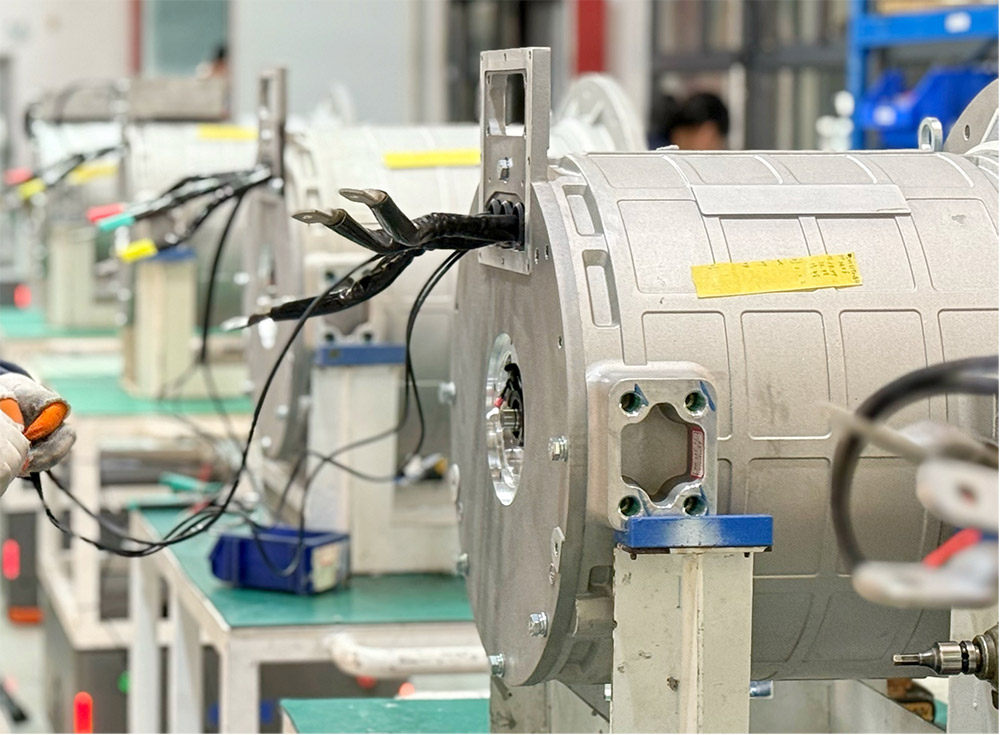
After the equipment was put into application, the customer's motor housing casting grinding batch consistency improved significantly, and the rework defect rate dropped sharply. Automated grinding replaces high-intensity manual positions, improving production cycle time and reducing labor costs and dust-related operational risks. The product stably meets the assembly standards of power equipment OEMs, helping the customer improve quality and efficiency and enhance competitiveness in the power equipment casting market.
(This case requires confidentiality regarding customer information and product information. The above images are all sourced from publicly available information online and are for reference only. If you have any questions or if there is any infringement, please contact us for handling.)