
Machine Tools
2026-07-30
Machine Tool – Bed
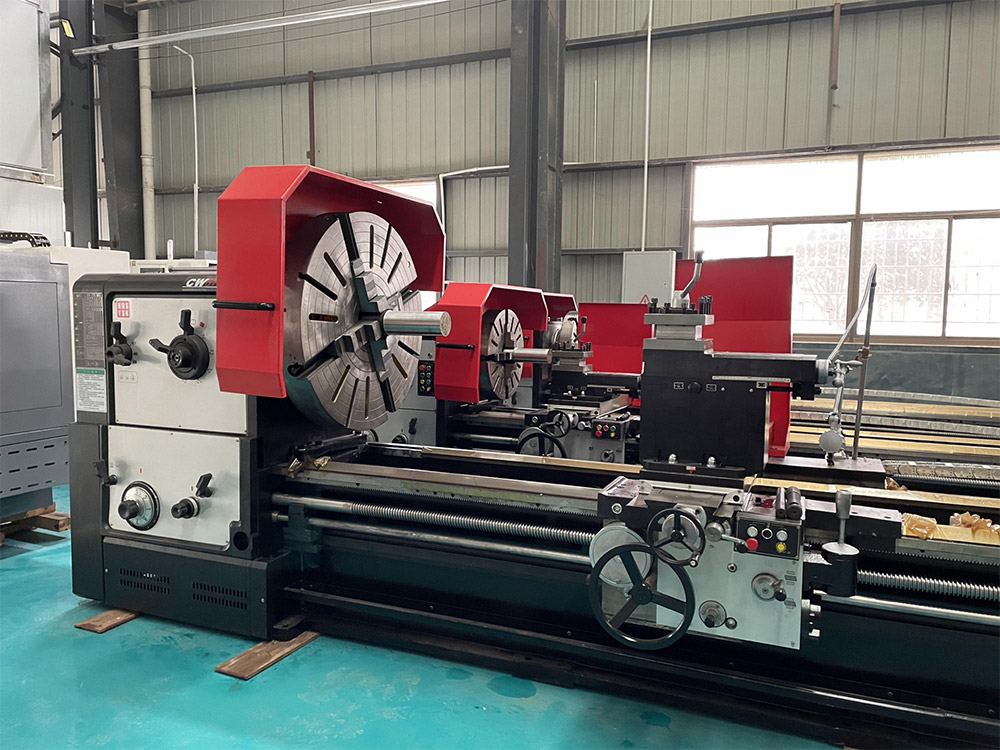
Machine tool beds are the fundamental load-bearing core castings of precision machine tools and directly determine equipment stability and machining accuracy. As the high-end equipment manufacturing industry upgrades, the market continues to raise requirements for the surface flatness, structural consistency, and appearance precision of machine tool bed castings. Traditional manual grinding suffers from low efficiency and large precision fluctuations and can no longer meet the needs of large-scale, standardized production supporting applications.
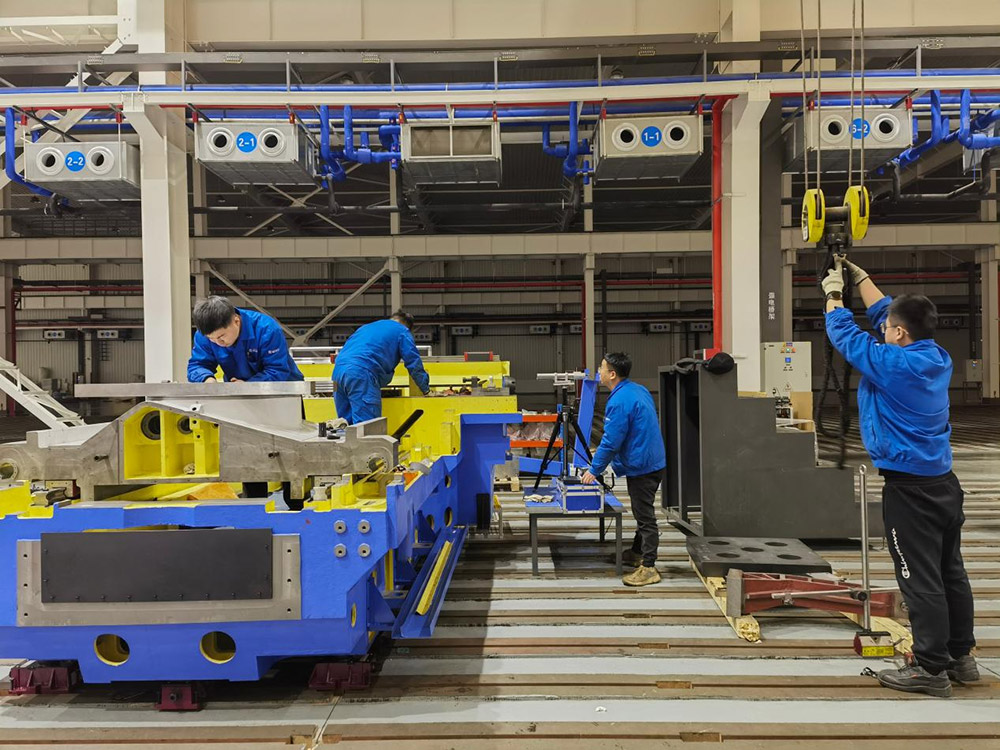
Machine tool beds are mostly produced through lost foam casting. The castings are large in volume, heavy in weight, and significantly varied in wall thickness, with dimensions generally reaching several meters in length. During the casting cooling process, overall shrinkage and expansion as well as bending deformation are highly prone to occur, and the deformation of each batch of castings varies from piece to piece. At the same time, large amounts of heavy flashes and oxide scale are present on the parting surfaces, mounting end faces, and edges and corners of the beds. Traditional fixed fixture positioning cannot accommodate casting deformation deviations, making problems such as uneven grinding, out-of-tolerance flatness errors, and localized under-grinding highly prone to occur.
To address the grinding pain points of large bed castings, Quanyu Industry has innovatively adopted a floor rail seventh-axis coordinated grinding solution, expanding the robot's working stroke and grinding coverage to perfectly accommodate the overall grinding of large-size beds. At the same time, it is equipped with core 3D vision deviation correction technology to scan the actual contour of castings in real time. Through intelligent algorithms, it precisely calculates and dynamically compensates for the shrinkage and expansion deformation of castings, eliminating the need for custom fixtures and automatically adapting to the special-shaped deviations of individual workpieces. This completely resolves the industry challenges of inaccurate positioning of large workpieces, incomplete grinding coverage, and unstable precision.